Twenty - The #1 Open-Source CRM
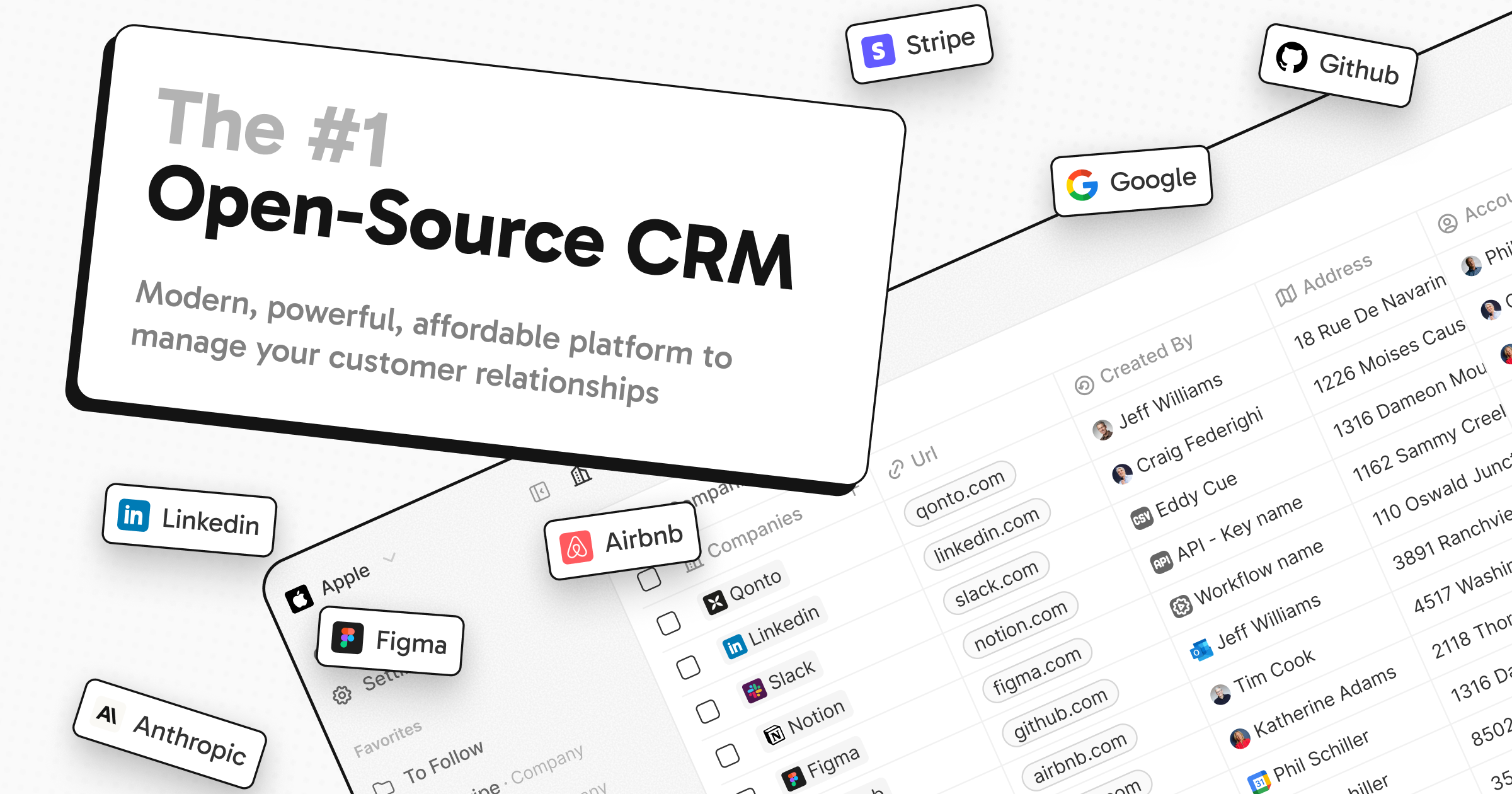
Twenty is a modern, open-source CRM alternative to Salesforce—fully customizable, affordable, and powered by the community.
What it is
Twenty is an open-source customer relationship management (CRM) platform. It is designed as a modern, powerful, and affordable operating system for customer data. It is built for fast-growing companies that require a CRM adaptable to their unique workflows and evolving business requirements.
Main Features
Data Management and Customization
- Import and store large amounts of customer data
- Customize objects and fields to tailor the data model
- Create personalized views of data
Access Control and Collaboration
- Manage user permissions and access levels
- Synchronize emails and share them with teams with configurable privacy settings (everything, subject and metadata, or metadata only)
- Create rich notes with text blocks and markdown support
Automation and Workflow
- Automate tasks and processes with workflows
- Connect to other systems using powerful APIs and Webhooks
User Experience
- Utilize a command menu (⌘K) for quick navigation and actions (e.g., search, create company/people)
- Navigate with intuitive keyboard shortcuts
- View data in Kanban-style boards to visualize workflows
- Enable dark mode for improved visibility
How it works
Managing Sales Pipelines
Users can visualize their deal stages using Kanban views (e.g., New, Engaged, Proposed). They can track key deal information, including associated companies, contacts, and amounts, to manage their sales process effectively.
Centralizing Customer Communications
Users can synchronize their email inbox with the CRM. Emails are logged against relevant company and contact records, allowing teams to maintain a shared, up-to-date history of all customer interactions directly within the platform.
Customizing for Unique Business Needs
Users can import their customer data and then customize the CRM's data model by creating new objects and fields. This allows them to structure the platform around their specific operational data and unique processes.
Key Points
- It is licensed under the GPL, meaning users own their software instance and are not subject to licensing fees, offering significant cost savings.
- As an open-source project, it benefits from community-driven development, including collective security oversight, an open roadmap, and the ability for users to contribute code or fork the repository.
- It is backed by Y Combinator (YC S23).
- The platform is designed to provide the simplicity of a SaaS product with the freedom and control of self-hosted open-source software.
Additional Details
- The project has a significant community presence, with 35.2k stars on GitHub and an active Discord server for support.
- The code is publicly available on GitHub, allowing for transparency and community contributions.
- The website provides links to documentation, user guides, release notes, and a story page explaining the company's background.
- A cloud-hosted version is available, and users can also self-host the software.